Pages

Showing posts with label recipes. Show all posts

your basic vegetable stir fry


Growing up, vegetables were as much a staple as white rice was in every meal. I remember Dad watching us kids with eagle eyes until we’ve cleaned our plates off any rice or veggie residue.

vegetable stir fry with rice
basic vegetable stir fry rice topping

It was a dictatorial household, I tell you. No kid was allowed to leave the table unless and until he or she has eaten the vegetables that Dad or Mom has dished on his or her plate. I remember my younger siblings and me trying to finish the generous servings of bitter gourd (ampalaya) that Dad would put on our plates, all the while tears streaming down our cheeks. Mealtimes could be such a drama sometimes, heh.

Grown up and a-wanting my veggies all the time, I can’t help but be grateful Dad and Mom taught us how to eat our veggies. I certainly couldn’t survive without them…which brings me to my all-time favorite easy-to-cook, ready-in-a-jiffy vegetable dish: vegetable stir fry.

If I’m pressed for time, there’s a fresh harvest from my backyard vegetable garden, and hubby’s on his way home, this veggie dish is my lifesaver.

Basic Vegetable Stir Fry Recipe 
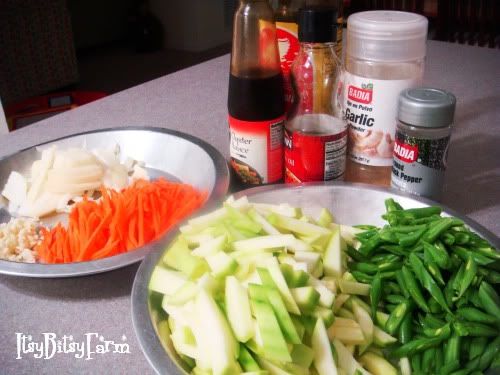
vegetable stir fry ingredients

You’ll need:
1 lb pork, cut into bite size pieces
2 T soy sauce1 T sesame oil
1/2 t garlic powder
Dash of pepper
1 c water, divided
1 T vegetable oil
5 cloves garlic, minced
1 medium-sized sweet onion, sliced
1 c diagonally sliced green beans
2 c sliced zucchini (about 2 pieces)
1 c julienned carrots
Oyster sauce, to taste

cooking vegetable stir fry

  1. Marinate pork in soy sauce, sesame oil, garlic powder and pepper and let stand for 30 minutes.
  2. Cook the pork in its marinade, adding 1/2 c water, at high heat. As soon as it boils, lower heat to medium. Let simmer until water has evaporated and the fat has rendered. Place the pork to the side of the wok.
  3. Add vegetable oil (if needed) and sauté garlic and onion. When the onion has turned clear, add the green beans. Sauté for 5 minutes.
  4. Add the zucchini and sauté for another 5 minutes. 
  5. Add the carrots and sauté for 2 minutes.
  6. Add oyster sauce and adjust according to your taste. Add 1/2 c of water for sauce. As soon as the sauce is simmering, remove from heat and serve immediately with steamed rice. Yummy!
Notes:
Potatoes, broccoli, chayote, and cauliflower are also delicious additions to this vegetable stir fry dish.
 

pinoy bistek recipe

One of my favorite(st) home cooked meals is Pinoy Bistek, the Filipino version of a beef steak dish. Thing is, Pinoys love sabaw (soup/runny generous sauce) so Bistek gives a nod to that penchant by allowing cooks to add a li’l bit of it in a beef steak dish.


The Bistek I love best is the one prepared by my BFF’s brother-in-law Kiko. It’s got that right balance of saltiness and tang that makes drenching hot steamy rice in Bistek sauce the best gustatory delight ever.

I’ve probably tried about 20 times to replicate Kiko’s recipe (which he’s been meaning to share but couldn’t get ‘round to it). After the nth try, I think I’ve got it.

Bistek is ordinarily prepared with calamondin (kalamansi), a much more acidic citrus that’s native to the Philippines, but this recipe calls for lemon juice. The resulting Bistek approximates that of the one you’d have if you prepared it with kalamansi...but not quite. Still, it’s got the taste that I like so I’m happy. (And I've served this in no less than two parties and the dish received a rousing welcome—both from American and Pinoy audiences—so I think others liked it, too!)

Pinoy Bistek Recipe

2.5 lbs chuck roast beef, sliced thinly
2/3 c dark soy sauce
Juice of 4 lemons
6 cloves garlic, minced
1 T vegetable oil
1 t ground pepper
2 t sugar
2 T vegetable oil
1 large onion, sliced into rings
2 large onions, halved and sliced thickly

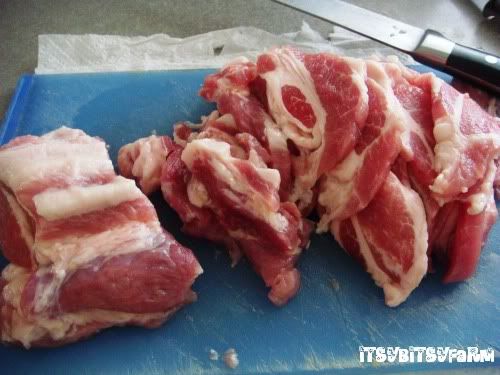
  • Prepare the beef by washing it thoroughly, then drying it just as well with paper towels. Once dry, slice the chuck roast into thin, steak slices.
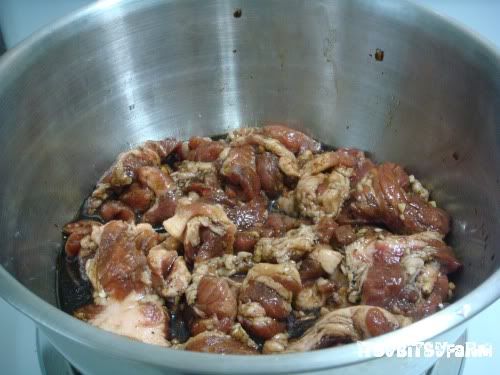
  • Mix the soy sauce, lemon juice, minced garlic, vegetable oil, ground pepper and sugar in a bowl. Marinade the beef, then cover the bowl with cling wrap. Let it sit in the refrigerator for about 30 minutes to 1 hour.

  • Once the beef is ready, heat a skillet with the remaining vegetable oil and fry the beef slices until brown, about 4 minutes each side. Remove the cooked beef from the skillet and place in another bowl.
  • When all the beef slices have been fried, sautee the onion rings in the same oil for about a minute or until half cooked. Transfer to a bowl. You’ll use this to top the beef steak, for presentation purposes.
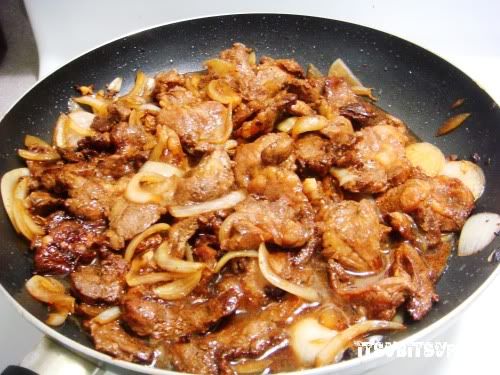
  • Sautee the other set of sliced onions. Once the onions are ready (it becomes transparent), pour the marinade onto the skillet and let boil. 
  • Return the beef to the skillet and adjust the taste according to your preferences. You can add water, more soy sauce or more lemon juice to suit your palate. Simmer for 5 minutes or so.
  • Immediately serve with hot, steaming rice. Yum!

Cook’s Notes:

The many trials and errors that I went through getting the Bistek taste that I want led to the discovery that it’s all in the soy sauce-lemon juice balance. Elementary, right? Well, in the kitchen, I’m not really a savvy cook, more like a science student—happily mixing stuff, heh.

But I digress.

So, how’d you know if you’ve achieved the right combination of lemon juice and soy sauce? Taste it after you’ve mixed it, of course (sans beef yet, heh). The mixture usually approximates the taste of the final cooked sauce. (For me, the ratio is 1/3 cup soy sauce to the juice of 2 pieces lemon.)

If you’re as adventurous as I am, you can also replace the beef with pork. The pictures you’re seeing in this post use pork as base and it’s as yummy as the original Bistek.


I’ve also discovered that Bistek tastes better when served with fresh garden salad topped with balsamic vinaigrette dressing. Yummylicious!